
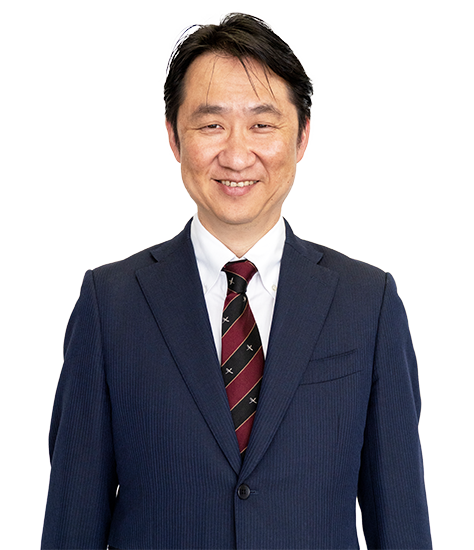
Atsushi HASHIZUME
Director
In recent years, the development of pharmaceuticals and medical devices has been undergoing a profound transformation. New technologies and concepts are rapidly being adopted, including the use of real-world data (RWD) in regulatory approvals, the advancement of digital transformation (DX) in clinical research, and the integration of patient-reported outcomes (PROs) as evaluation metrics. Moreover, the importance of patient and public involvement (PPI) is increasing, together with the broader adoption of flexible clinical trial designs, such as master protocol studies. In addition, the emergence of new therapeutic modalities, such as gene therapies, oligonucleotide therapeutics, and cellular regenerative medicine, has highlighted challenges that are difficult to address within conventional frameworks for drug development and evaluation. In particular, in the fields of personalized medicine and ultra-rare diseases, there is a pressing need for development strategies that do not rely on traditional large-scale clinical trials, as well as for novel approaches to evidence generation. Furthermore, advances in data science and AI have led to increasing sophistication and complexity in clinical trial design, data analysis, and even overall development strategies, thereby underscoring the growing importance of a cross-cutting perspective that encompasses the entire research and development process. In this context, clinical research is advancing into a phase that emphasizes practical implementation, including regulatory approval and clinical adoption. Academic Research Organizations (AROs) are now expected to adopt a strategic and comprehensive approach to advanced medicine, providing collaborative support throughout the development process.
At Nagoya University, the Department of Advanced Medicine serves as a central organization driving these initiatives. Guided by the hospital’s mission—”We will contribute to society through medical care, education, and research”—the department aligns with one of the institution’s four core principles: “to pioneer new-generation medical technologies and practices.” Based on this vision, we are actively engaged in supporting advanced medical development daily.
As of April 1, 2026, the Department of Advanced Medicine has been reorganized into a four-center structure comprising the Translational Research Center, Clinical Development Center, Clinical Trial Support Center, and Data Coordinating Center. Through this reorganization, we have strengthened our capacity to provide seamless, end-to-end support across the entire process, from basic research to regulatory approval. Together, they provide end-to-end support across the entire development pathway, from basic research to regulatory approval. In the area of oligonucleotide therapeutics, investigator-initiated clinical trials are currently underway targeting malignant brain tumors—a rare and difficult-to-treat condition. In the field of biomedicine, significant progress has been made through investigator-initiated trials, such as those involving CAR-T cell therapy using transposon vectors and the development of novel treatments for perinatal brain injury using Induced Pluripotent Stem cells (iPSCs). In the field of medical devices, a regenerative device designed to isolate autologous subcutaneous adipose-derived stem cells intended for the minimally invasive treatment of male stress urinary incontinence has successfully obtained regulatory approval.
We are also firmly committed to the development of ARO professionals. We offer training programs for physicians, dentists, and other professionals interested in clinical research and trials, and we actively organize seminars both within and outside the institution.
In addition, through collaboration with the Department of Clinical Research Education, established within the Graduate School of Medicine in 2021, we are working to create an educational and research environment that develops both support personnel and the next generation of clinical researchers. This department aims to cultivate individuals capable of designing and refining research questions based on clinical practice and leading them through to social implementation. By closely collaborating with the Department of Advanced Medicine, it aims to establish a model of clinical research education that is grounded in practical application.
We aim to develop a new clinical research support model based at Nagoya University Hospital—one that contributes to medical innovation, benefiting society from the Chubu region to the entire country and, ultimately, the world.
“From Chubu to Japan and the world.”
The Department of Advanced Medicine is committed to shaping and steadily realizing a model of clinical research support that meets the demands of this new era. We greatly appreciate your continued guidance and collaboration in helping us achieve this vision.